
Commercial Services
Commercial
Domestic Services
Domestic
Commercial tree surgery and domestic tree work both involve professional tree care, but the scale, planning, compliance and site management requirements are often very different.
For homeowners, tree work might mean pruning an overgrown tree, removing a stump or maintaining a hedge. For commercial clients, it may involve site vegetation clearance, woodland management, tree surveys, planning support, contractor coordination and strict health and safety procedures.
Understanding the difference helps you choose the right level of expertise, avoid delays and make sure the work is carried out safely and legally.
Domestic tree work usually takes place at private homes, rental properties or small residential sites. It often focuses on safety, appearance, light, access and long-term tree health.
Commercial tree surgery is usually larger in scope. It may involve multiple trees, larger teams, machinery, risk assessments, public access, protected trees, construction schedules or coordination with other contractors.
The main difference is not always the tree itself. It is the responsibility around the work.
Commercial projects often need:
Domestic projects still require care and professional standards, but they are usually simpler to organise and complete.
Domestic tree work is tree care carried out for private clients, landlords or homeowners.
Typical domestic work can include:
A homeowner might need help because a tree is blocking light, growing too close to a building, dropping branches, interfering with a boundary or looking unhealthy.
In these situations, the priority is usually to find the safest and most sensible option. A good arborist should not recommend removal unless it is genuinely needed. Careful pruning, crown management or root investigation may be more appropriate. For residential work, explore The Roots Company’s domestic tree services.
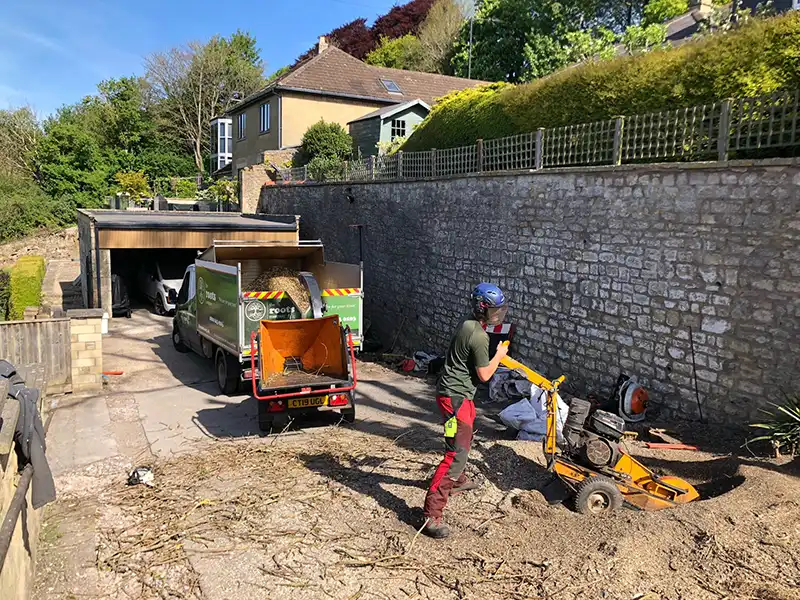
Commercial tree surgery is carried out for businesses, developers, contractors, estate managers, landowners, schools, local authorities and larger organisations.
It often includes:
Commercial projects can be time-sensitive, especially when linked to construction, infrastructure or land management. A delay caused by unclear permissions, unsafe access or missing documentation can affect wider project schedules.
For larger projects, The Roots Company provides commercial tree services for clients who need professional, compliant arboricultural support.
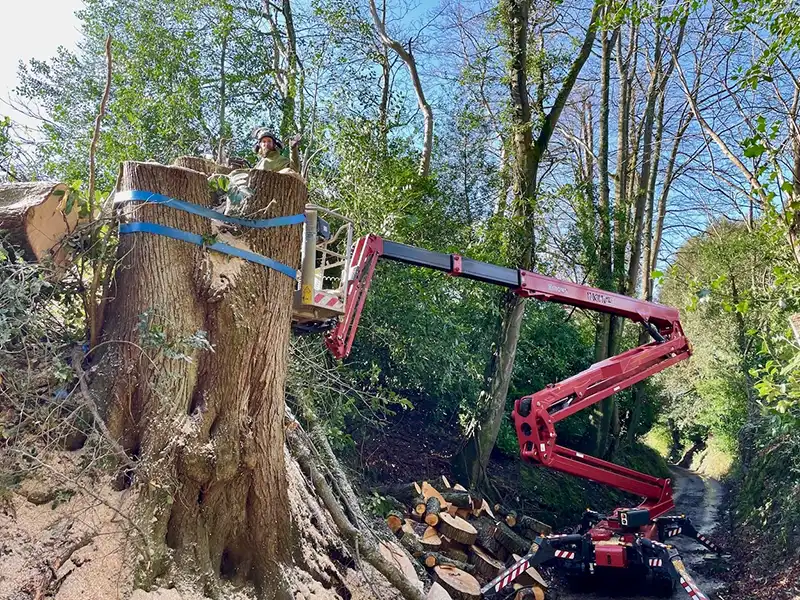
Compliance matters in all tree work, but commercial sites usually carry greater legal, operational and safety responsibilities.
A commercial client may need to show that the contractor is qualified, insured, competent and able to work safely alongside other trades or members of the public.
Tree work can also be affected by:
The UK Government provides guidance on Tree Preservation Orders and trees in conservation areas, which is particularly relevant where protected trees may be affected.
Where climbing, rigging or lifting operations are involved, the Health and Safety Executive explains how LOLER applies to arboriculture. This is one reason commercial clients often look for contractors with recognised accreditations and proven systems.
One of the biggest differences between domestic and commercial work is risk exposure.
On a domestic job, the risks may involve nearby fences, sheds, gardens, driveways, homes or neighbouring properties.
On a commercial site, the risks can be broader. There may be workers, vehicles, pedestrians, utilities, public footpaths, neighbouring businesses, ecological constraints or construction deadlines.
Commercial clients usually need reassurance that the contractor can provide:
This is where accreditations matter. The Arboricultural Association states that its Approved Contractor scheme is designed to raise standards in tree work, health and safety, professional standards and customer care. You can read more about the Approved Contractor standards.
Domestic tree work may only require a small team and a focused visit.
Commercial tree surgery may require more people, more planning and more specialist equipment. Larger sites can involve multiple access points, heavy timber, difficult ground conditions, vegetation clearance, tracked machinery, traffic management or phased works.
The scale of the project affects:
For developers and contractors, this planning stage can be just as important as the tree work itself.
Before any tree work begins, it is important to check whether the trees are protected.
This applies to both domestic and commercial clients, but commercial projects are more likely to involve formal planning, development constraints or multiple stakeholders.
Common situations include:
If a tree is protected by a Tree Preservation Order or located in a conservation area, permission may be required before work starts. On sensitive sites, additional environmental consent may also be needed.
Professional advice at the start can help prevent delays, refusals or enforcement issues.
You probably need domestic tree work if:
You probably need commercial tree surgery if:
Where the situation is unclear, it is usually worth speaking to a qualified arboricultural team before making decisions.
A small pruning job and a large commercial clearance project require very different planning. Choosing a contractor without the right experience can create safety, compliance and scheduling issues.
Protected trees, conservation areas and planning conditions can affect what can be done. Always check before work begins.
Cheap tree work can become expensive if it causes damage, delays or legal issues. Competence, qualifications and proper planning matter.
Tree removal is not always the best solution. Pruning, management or investigation may protect the tree while solving the problem.
The right tree surgery contractor should understand both the technical side of arboriculture and the practical realities of the site.
For domestic clients, that means clear advice, respectful working practices and a sensible approach to tree health.
For commercial clients, it means safety, compliance, communication and the ability to work as part of a wider project.
The Roots Company is a family-run arboricultural business established in 2015, with a team of qualified arborists and recognised accreditations including Arboricultural Association Approved Contractor status, CHAS and SMAS. You can learn more about the team, values and qualifications on the About The Roots Company page.
Often, yes. Commercial tree surgery usually involves larger sites, more documentation, stricter safety requirements and coordination with other people or organisations.
Sometimes. If a tree is protected by a Tree Preservation Order or located in a conservation area, permission may be required before work begins.
Yes, but they should have the right qualifications, insurance, equipment and experience for the type and scale of work required.
Useful information includes site plans, access details, deadlines, known tree constraints, planning conditions and any contractor requirements.
Arrange a professional assessment. This helps identify the safest option, any permissions needed and the most suitable approach.
Commercial tree surgery and domestic tree work share the same core goal, safe, responsible tree care. The difference lies in scale, compliance, planning and the level of coordination required.
If you are unsure which type of support you need, The Roots Company can help you understand the next step clearly. For advice on a residential garden, commercial site or regulated tree work, speak to the team through the contact page.